
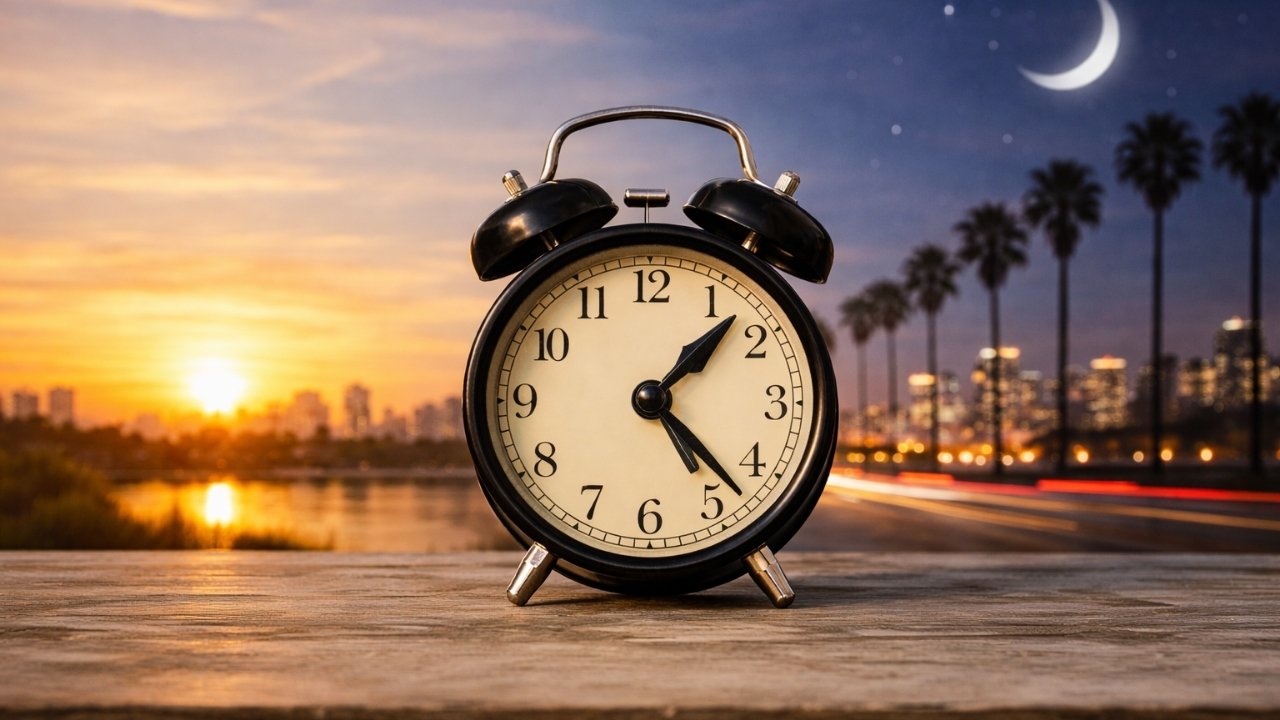
Daylight Saving Time will once again shape daily routines across California in 2026, continuing the long-standing national system used in most parts of the United States. The change affects households, workplaces, schools, transportation services, and digital systems by advancing local clocks in the spring and setting them back in the fall.
Each year, the time adjustment raises questions about when it occurs, which direction clocks should move, and how it may affect travel schedules, work shifts, and early-morning activities. Because the change occurs during the early hours of a Sunday, many people rely on automatic updates on their devices, while others must manually adjust their clocks.
For 2026, California will follow the same federal schedule used nationwide. Understanding the exact dates and the impact of the one-hour shift is important to avoid missed appointments, incorrect alarms, and confusion about meeting times. Clear planning helps residents and businesses stay aligned with the official time standard year-round.
Table of Contents
When Daylight Saving Time Will Change in California in 2026
California will begin Daylight Saving Time on Sunday, March 8, 2026. At exactly 2:00 a.m., clocks will advance to 3:00 a.m., marking the transition from Pacific Standard Time to Pacific Daylight Time.
The state will return to standard time on Sunday, November 1, 2026. At 2:00 a.m., clocks will move backward to 1:00 a.m., switching California back to Pacific Standard Time. These dates follow the federal rule that Daylight Saving Time starts on the second Sunday in March and ends on the first Sunday in November.
| Event in California | Date in 2026 | Time of Change | Clock Movement | Time Zone Change |
|---|---|---|---|---|
| Daylight Saving Time begins | March 8, 2026 | 2:00 a.m. | Forward by 1 hour | PST to PDT |
| Daylight Saving Time ends | November 1, 2026 | 2:00 a.m. | Back by 1 hour | PDT to PST |
Which Direction the Clock Moves
In March, Californians must move their clocks forward by one hour, a shift often called “springing forward.” In November, clocks are moved back by one hour, commonly known as falling back.
Before March 8, the state operates on Pacific Standard Time, which is eight hours behind Coordinated Universal Time. From March through early November, California uses Pacific Daylight Time, which is seven hours behind Coordinated Universal Time. After November 1, the state returns to Pacific Standard Time.
This shift alters daylight patterns across the state. After the March change, evenings gain more daylight while mornings become temporarily darker. After the November change, mornings become brighter earlier and evenings grow darker sooner.
What Happens During the Exact Hour of Change
When Daylight Saving Time begins, the hour between 2:00 a.m. and 2:59 a.m. disappears from the local clock. Time jumps directly from 1:59 a.m. to 3:00 a.m., creating what is often described as a lost hour. This can affect night shift workers, early travelers, and anyone with schedules closely tied to the clock.
When Daylight Saving Time ends, the hour between 1:00 a.m. and 1:59 a.m. occurs twice. The first time happens under Pacific Daylight Time and the second under Pacific Standard Time. This repeated hour can complicate record keeping, payroll systems and transportation timetables that depend on precise timestamps.
How Devices and Clocks Adjust
Most smartphones, computers, and internet-connected devices automatically update when set to the correct time zone. These systems rely on built-in time change data and usually switch without requiring user action.
However, many household clocks still require manual adjustment. These include wall clocks, car dashboards, microwave ovens, and some alarm clocks. Many people change these clocks on Saturday night before the Sunday transition to ensure accuracy the next morning.
Calendar entries and alarms should also be reviewed, especially for early morning work shifts, medical appointments, or travel plans on the day of the change.
Effects on Travel, Work and Public Services
The time change affects transportation schedules, especially for early-morning flights, long-distance bus routes, and train services. Airlines and transit providers automatically update their systems, but passengers are encouraged to confirm departure and arrival times.
Workplaces may see short-term adjustments as employees adapt to the one-hour shift. Time tracking systems, payroll processing, and meeting schedules must reflect the correct time zone. Schools and public offices also follow the new local time, which affects opening hours and transportation arrangements.
For businesses and services that operate across multiple time zones, it becomes especially important to note whether California is using Pacific Standard Time or Pacific Daylight Time when coordinating with other regions.
California Policy and Time Change Rules
California voters approved a measure in 2018 that allows lawmakers to consider changes to how the state observes time. However, this approval did not automatically end clock changes. Any permanent change would require additional legislative action and must comply with federal law.
Under current rules, states may remain on permanent standard time without federal approval. Adopting permanent daylight time would require action at the national level. No new law has been enacted that would alter California’s time system for 2026.
As a result, residents should expect the traditional spring and fall clock changes to remain in place.
Reminders for Residents
- Daylight Saving Time begins on March 8, 2026, and clocks move forward one hour at 2:00 a.m.
- Daylight Saving Time ends on November 1, 2026, and clocks move back one hour at 2:00 a.m.
- Most digital devices adjust automatically, but many household clocks must be changed manually.
- The time change affects work schedules, travel plans and early morning routines.
- California will continue following the national Daylight Saving Time schedule in 2026.
Daylight Saving Time in California for 2026 will follow the familiar pattern of one change in spring and one in fall, with each shift moving clocks by exactly one hour. While the adjustment may seem small, its impact reaches across daily life, influencing sleep schedules, transportation timing, business operations, and public services.
By knowing the exact dates and understanding how the clock moves, residents can prepare in advance and reduce confusion. Checking manual clocks, confirming alarms, and reviewing important appointments can help ensure a smooth transition. For 2026, Californians should plan for the March and November changes as part of the normal yearly calendar and continue to follow the national time standard without interruption.